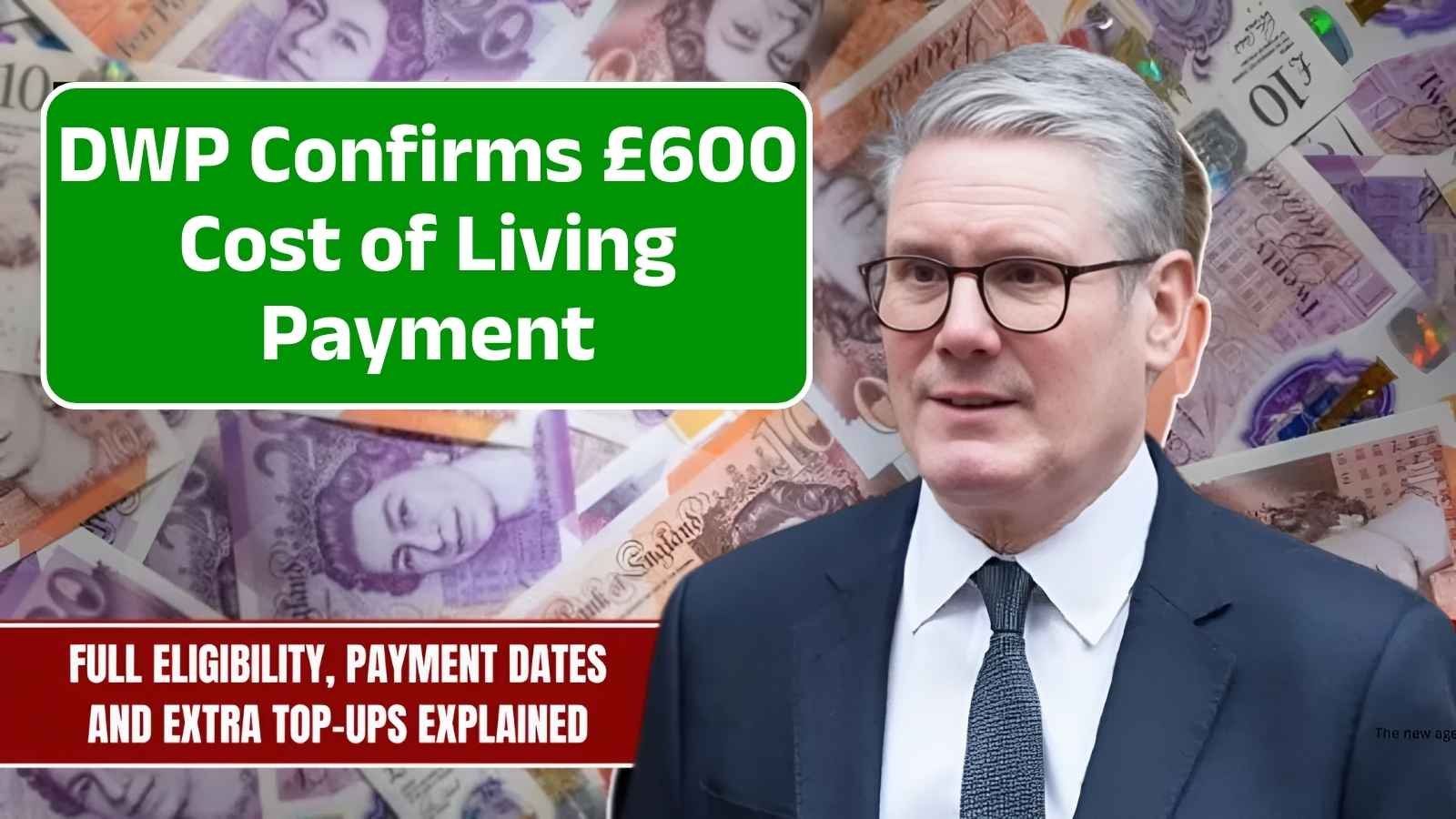
The cost of living is still biting hard in the UK, and if you’re on a low income or claiming certain benefits, help is on the way again in 2025.
The Department for Work and Pensions (DWP) has confirmed a new £600 Cost of Living Payment for eligible households. This is part of the government’s ongoing plan to support people through rising bills, food prices, and inflation-related pressures.
Here’s everything you need to know about the payment, who qualifies, when it’s coming, and whether you could get any extra top-ups.
What Is the £600 Cost of Living Payment and Why It Matters
The £600 payment is a one-off, non-taxable support payment designed to help struggling households manage essential costs in 2025.
It’s particularly aimed at those who are receiving income-related benefits or who are considered vulnerable to cost pressures. If you qualify, this money could go toward rent, groceries, heating, or debt repayments no strings attached.
It’s a continuation of support from previous years, where similar payments of £301, £299, or £150 were given out to millions of people. The amount has increased for 2025 in recognition of ongoing financial strain across the UK.
When the £600 Payment Will Be Made in 2025
The government hasn’t published exact payment dates yet, but based on the timeline from earlier rounds, the £600 payment is expected between March and May 2025.
In previous years, the DWP paid similar cost of living support in staggered batches, depending on which benefit you received.
If you’re eligible, the payment will be made automatically. You do not need to apply.
How the £600 Cost of Living Payment Works – Explained Simply
To get the £600 payment, you must have received at least one qualifying benefit during a specific “qualifying period” this is usually a few weeks or days that the DWP will confirm in early 2025.
Here are the benefits that typically qualify:
| Qualifying Benefits for £600 Payment |
|---|
| Universal Credit |
| Pension Credit |
| Income Support |
| Income-based Jobseeker’s Allowance (JSA) |
| Income-related Employment and Support Allowance (ESA) |
| Working Tax Credit |
| Child Tax Credit |
You only need to be receiving one of these during the qualifying period. People on contribution-based benefits (like contribution-based JSA or ESA) are not usually eligible unless they also get an income-based top-up.
If you receive benefits through both DWP and HMRC, your payment may come later than others but you’ll still get it.
What About Extra Top-Ups? Here’s What You Should Know
In addition to the £600 payment, extra help may be available in the form of top-ups. These are usually offered to:
- Pensioners receiving Winter Fuel Payments
- People with disabilities on certain disability-related benefits
- Families supported by local councils through the Household Support Fund
For example, some pensioners could receive an additional £300–£500 through the Winter Fuel Payment scheme, depending on their age and circumstances.
Your local authority might also offer help with food vouchers, heating support, or rent arrears especially in colder months.
Common Mistakes With the £600 Payment and How to Avoid Them
A few avoidable mistakes could cause delays or mean missing out altogether:
- Not checking whether your benefit is income-based Contribution-based benefits alone usually don’t qualify
- Assuming you’ll automatically get it because you got a payment last year Each year has different eligibility rules
- Changing your bank account and forgetting to update DWP or HMRC
- Ignoring letters or messages from DWP updates are often sent via your Universal Credit journal or post
If you’re not sure what type of benefit you’re on, check your award letter or ask your local Jobcentre or Citizens Advice.
Best Ways to Use the £600 Payment Effectively
This one-off payment can be a game changer if managed well. Here are some smart ideas:
- Cover essentials first: pay down priority bills like rent, council tax, or energy arrears
- Bulk buy or batch cook where possible to stretch food money further
- Set aside a portion (even £50–£100) in case of an emergency
- Use it to reduce debt repayments or interest on credit cards
- Check for other support schemes to stack your savings especially if you have children, disabilities, or care responsibilities
The Latest Updates on the 2025 Cost of Living Support
As of October 2025, here’s what we know:
- The £600 Cost of Living Payment is confirmed and will be paid in spring 2025
- Exact qualifying dates are still pending, but they’ll be published early in the new year
- The payment will be handled by DWP and HMRC, depending on which benefit you receive
- Extra top-ups for pensioners, disabled individuals, and families may also apply
- No applications are needed the payment is automatic if you’re eligible
Conclusion: What to Expect From the 2025 £600 Payment
The £600 Cost of Living Payment for 2025 is a welcome relief for millions of UK households. If you receive Universal Credit, Pension Credit, or similar income-based benefits, you’ll likely qualify.
You don’t need to apply, but you do need to make sure your benefit claim is active during the qualifying period. Check your payment details, stay on top of messages from DWP or HMRC, and use the money wisely when it arrives.
If you’re unsure, speak to Citizens Advice or visit GOV.UK for updates as more details become available.
FAQs: Quick Answers About the £600 Cost of Living Payment
When will the £600 Cost of Living Payment be paid?
The payment is expected between March and May 2025, depending on your benefit type.
What benefits qualify for the £600 payment?
Universal Credit, Pension Credit, Income Support, income-based JSA or ESA, and tax credits are among the main qualifying benefits.
How will I receive the payment?
It will be paid automatically to your usual benefit bank account. No need to apply or contact DWP.
Why didn’t I get last year’s payment?
You may not have received a qualifying benefit during the required period, or your benefit was contribution-based only.
Can I get both the £600 payment and other support like Winter Fuel Payments?
Yes, you can receive both if you qualify. Many people are eligible for multiple forms of help.